


Responsible Parenting: The Lessons We Teach Without Speaking
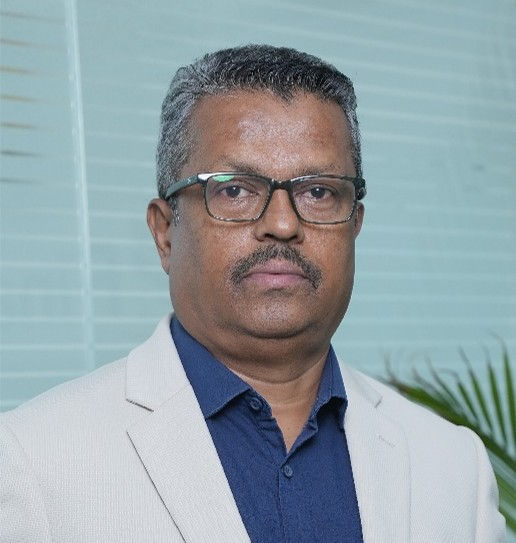
Dr. Balaji Rao DG
PhD in Mutual Funds & Personal Finance
Dr. Balaji Rao DG is a SEBI-NISM empanelled financial educator with 39 years of experience, including 25 years in BFSI and 14 years in training and academics. He holds B.Com., MBA, a PGDMM, PGDFA and a PhD in Mutual Funds and Personal Finance. He has delivered 800+ investor awareness and distributor training programs across India. Dr. Balaji has been associated with leading institutions as a trainer-speaker, including HDFC Mutual Fund, Aditya Birla Sun Life Mutual Fund, ICICI Prudential Mutual Find and Canara HSBC Life Insurance.
He is the co-founder & Director of Finatoniq Ventures Pvt. Ltd. He is also the author of 12 books (10 in English & 2 in Kannada) and a former columnist with The Hindu, currently writing a regular weekly column for VK Money (Vijaya Karnataka). Widely featured across TV, radio and print media, his mission is to simplify financial literacy and transform individuals from investors into successful investors.
Being a parent is perhaps one of life's greatest fulfilments. But parenthood is much more than nurturing a child, providing education, ensuring good health and helping the child become an independent adult. Parenthood carries a deeper responsibility - the responsibility of being a role model.
Every parent wants their child to be disciplined, respectful, honest, responsible and compassionate. We want our children to follow rules, respect others, care for the environment and become good citizens. But there is one uncomfortable question every parent must ask: “Am I practising what I am asking my child to learn?”
Look around us. It is not uncommon to see parents riding two-wheelers with their children without wearing helmets. Some talk on mobile phones while riding, balancing the phone between their shoulder and ear. Some jump traffic signals because they are in a hurry (even when they are not in a hurry). Some shout at other motorists and use expletives - with their children sitting right behind them.
In cars, we see adults throwing wrappers and bottles onto the road, parking wherever they please, smoking in public places, spitting on roads and ignoring basic civic rules. Perhaps many of them do these things without even thinking about the message they are sending to the child sitting beside them.
But the child is watching. Children are extraordinary observers. They may not always listen to what we say, but they almost always notice what we do.
We may tell our child, “Always wear a helmet.” But if the child sees us riding without one, which lesson will stay? We may tell them, “Never lie.” But what happens when they hear us asking them to tell someone on the phone, “Tell them I am not at home”? We may teach them not to litter, but then casually throw a packet out of the car window. The child does not see these as isolated incidents. The child sees them as acceptable adult behaviour.
The home, therefore, is much more than a place where a child lives. It is the child's first school. Long before teachers enter the child's life, parents are already teaching lessons - through their actions, conversations, reactions, habits and choices.

Responsible parenting is therefore not merely about protecting children from danger. It is also about protecting them from learning the wrong behaviours from us.
A child who sees parents patiently waiting at a red signal learns patience and respect for rules. A child who sees parents returning garbage to a bin learns civic responsibility. A child who watches parents apologise when they make a mistake learns humility. A child who sees parents treat domestic workers, strangers and the elderly with dignity learns respect. A child who sees parents control their anger learns emotional maturity.
And perhaps the most powerful lesson is this: “Do the right thing even when nobody is watching.”
Children don't need perfect parents. They need responsible parents who are willing to recognise their own mistakes and correct them. Parenting, therefore, is not only about preparing children for the world. It is also about preparing the world for our children - one responsible behaviour at a time.
The next time we are with our children, perhaps we should pause before we speak and ask ourselves: “If my child grows up and behaves exactly like me, will I be proud of the person I have helped create?”
That question may be uncomfortable. But perhaps responsible parenting begins with exactly that discomfort.