

THE POWER OF A WELL-CHOSEN WORD
Dr. P. V. Satya Ramesh Principal,
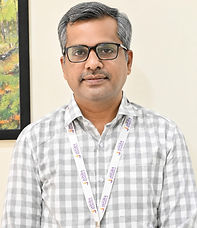
Seth M. R. Jaipuria School, Barwani, Madhya Pradesh
Dr. P. V. Satya Ramesh, a doctorate in Psychology, is an educator by choice with 26 years of experience in the field of education. A CBSE Resource Person and SQAAF Physical Quality Reviewer, he currently serves as the Principal of Seth M. R. Jaipuria School, Barwani, Madhya Pradesh. Passionate about empowering educators and strengthening educational practices, he is committed to fostering quality, excellence and inspiration in education.
A teacher’s words can build a child’s confidence, restore hope, inspire effort or leave a lasting wound. This is the power—and responsibility—that accompanies the teaching profession.
Communication forms the backbone of a teacher’s professional life. Every day, a teacher interacts with students, parents, colleagues and the wider community. The diversity of these interactions is immense. Students in a school setting may range in age from three to eighteen years, each with distinct developmental needs. Parents may have varied expectations and concerns, colleagues may represent diverse subject disciplines, and community members may come from different professional and social backgrounds. Each interaction, therefore, calls for a thoughtful approach to communication that is sensitive to the cognitive, emotional and social needs of the individual.
Given this complexity, choosing the right words, with the right intent, at the right time is both a challenge and an essential professional skill. For a teacher, words are not merely instruments of communication; they are powerful tools that can inspire confidence, nurture relationships, resolve conflicts, motivate learners and leave a lasting impression. A well-chosen word, spoken at the right moment, can make a profound difference in a learner’s life and strengthen the quality of a teacher’s professional relationships.
From simple words and phrases such as “Brilliant,” “Commendable” and “Outstanding” to expressions of profound appreciation, a teacher’s words have the power to inspire, motivate and shape children’s lives. However, the impact of these words depends not merely on what is said, but also on the sincerity, awareness and intent with which it is communicated. Appreciation, when genuine, can reinforce a child’s confidence and encourage further effort. Equally, a word of encouragement offered to a struggling learner can rekindle hope and the willingness to persevere.
The power of a well-chosen word, however, is not confined to appreciation and praise. At times, a child may need correction, guidance or a firm reminder. What distinguishes an effective teacher is the ability to communicate these with clarity and conviction without diminishing the child’s dignity. The objective is not merely to make a child listen, but to help the child understand, reflect and grow. Even a difficult message, when conveyed with sensitivity and respect, can become an opportunity for learning and transformation.
Bharat has never been short of noble teachers and enlightened guides, from ancient sages such as Vasista and Vishwamitra to eminent teachers and visionaries such as Dr. Sarvepalli Radhakrishnan and Dr. A. P. J. Abdul Kalam. Their lives and contributions remind us that education extends far beyond the transmission of knowledge. It is equally about nurturing character, awakening potential and inspiring individuals to contribute meaningfully to society. Drawing inspiration from these great souls, every teacher has the potential to begin a process of transformation within themselves and, in turn, shape the lives of learners and influence generations to come.
Unfortunately, we live in a world where digital approval often attracts more immediate attention than the wisdom shared by teachers in school settings. Likes, comments and instant reactions can offer quick gratification, whereas the influence of a teacher’s words may unfold gradually, sometimes becoming evident only years later. In such a scenario, it becomes all the more important for teachers to recognise the enduring value of their words. Teaching is, at its heart, a human endeavour, rooted in relationships, trust and understanding. No matter how rapidly the world changes, the power of a well-chosen word, spoken with sincerity and purpose, can never be underestimated.
On many occasions, we hear parents say, “My ward listens when a particular teacher says something.” Similarly, we hear teachers remark, “These students will listen only to that teacher.” We also find school leaders relying on a select group of teachers to handle challenging or crisis situations involving students or parents. Such observations offer valuable insights into the ability of certain teachers to communicate effectively by choosing the right words, with the right intent, at the right time. They also raise an important question: What enables some teachers to connect with people so effectively that their words command attention, inspire trust and influence behaviour?
This ability is not merely a natural gift possessed by a few; it is an art that every teacher must consciously cultivate. The objective should not be to depend on a select few teachers who can manage difficult situations, but to empower every teacher to communicate with confidence, empathy and purpose. The ability to communicate effectively, therefore, is not merely an additional professional skill; it is fundamental to a teacher’s effectiveness and fulfilment.
Human beings possess a remarkable capacity for language, making words one of the most powerful instruments through which we influence one another. Educators must recognise the responsibility that accompanies this gift and use it meaningfully to sow the seeds of compassion, empathy and the determination to become truly humane in young minds.
Over the years, curricula may evolve and technologies may emerge, transforming the ways in which knowledge is accessed, shared and acquired. Yet, one endeavour must remain constant: the conscious effort to nurture the humanity within every individual and ensure that it remains intact. For, ultimately, the true measure of education lies not merely in what children know or what they achieve, but also in who they become.